Cycling past a row of parked cars might seem harmless until a door suddenly swings into the street. The cyclist has only a split second to react, and even a quick attempt to avoid the door can lead to a serious fall. These incidents, often called dooring accidents, raise questions about road safety, legal responsibility, and what happens when an injured rider files an insurance claim.
The Hidden Danger of Riding Beside Parked Vehicles
Parked cars create a narrow area along the roadway where cyclists can unexpectedly encounter an opening door. This space, commonly called the door zone, extends outward from vehicles far enough to place passing riders directly in harm’s way. A cyclist might notice someone sitting inside a car but have no way of knowing whether that person intends to exit. Tinted windows, poor lighting, and closely parked vehicles can make the situation harder to judge. The danger also extends beyond direct contact with the door. A rider who suddenly swerves to avoid it may collide with another vehicle, strike a curb, or lose control in moving traffic.
Why Checking for Cyclists Before Opening a Door Matters
Alabama law places responsibility on people opening vehicle doors near moving traffic. Under Alabama Code Section 32-5A-54, a person cannot open a door on the traffic-facing side unless doing so is reasonably safe and will not interfere with traffic. The law also prohibits leaving a door open longer than necessary for passengers to enter or exit. These requirements apply to passengers as well as drivers, meaning someone sitting in the back seat may be responsible for creating a dangerous obstruction.
One way motorists can reduce this risk is by using the Dutch Reach method. Instead of opening the door with the hand closest to it, the occupant uses the opposite hand, which encourages a slight body turn toward the window. That movement makes it easier to check mirrors and look over the shoulder for approaching cyclists. Although this technique does not replace careful observation, it can help people notice riders before opening a door into their path.
Can a Parked Car Door Cause Injuries Without Direct Contact?
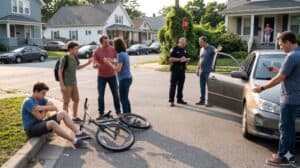
A bicycle accident involving a car door does not always require the cyclist to strike the vehicle. A rider may brake abruptly, turn into a pothole, or enter another lane while trying to avoid an unexpected obstruction. Such movements can cause a fall or a secondary collision with passing traffic. Wrist fractures, shoulder dislocations, facial injuries, and concussions are possible consequences. Establishing a connection between the opened door and the resulting bicycle injury becomes important when the rider never physically touched the vehicle. Witness accounts, nearby camera footage, and roadway evidence may help explain why the cyclist reacted and whether the danger was avoidable.
How Insurance Companies Examine Door-Related Collisions
Insurance adjusters typically review how the door opened, the cyclist’s position, and whether the person exiting the vehicle had an opportunity to check for traffic. Photographs showing the parking arrangement, available riding space, and door position may help establish what happened. Statements from witnesses can also clarify whether the door opened suddenly or remained open before the cyclist approached. A bicycle accident attorney may examine these details when the parties disagree about responsibility.
Alabama’s contributory negligence rule can make these claims particularly difficult. If the cyclist’s own negligence contributed to the collision, compensation may generally be barred, subject to limited exceptions. Insurers might question the rider’s speed, attention, or distance from parked vehicles. However, simply traveling beside parked cars does not automatically establish negligence. A bicycle accident lawyer can evaluate the surrounding circumstances and challenge allegations that lack supporting evidence.
What Injured Cyclists Should Know About Seeking Compensation
A bicycle accident claim may involve medical bills, lost wages, damaged equipment, and other losses resulting from the collision. The availability of compensation depends on liability, insurance coverage, and the evidence connecting those losses to the accident. Cyclists should preserve photographs, treatment records, witness information, and damaged bicycle components before important details disappear. Insurance coverage may also require closer examination when a passenger rather than the vehicle’s driver opened the door.
People searching for a bicycle accident lawyer in Madison AL can contact The Lackey Law Firm, which represents injured cyclists in Madison AL. The firm’s attorneys handle bicycle accident cases involving negligent motorists, disputed responsibility, and insurance claims. Their legal services can help injured riders examine the circumstances of a door-related collision and determine whether the available evidence supports a claim for compensation.