Flexible air ducts can look sturdy from the outside, but their inner lining is easier to damage than many homeowners realize. A cleaning brush that works perfectly in metal ductwork could tear through a flexible duct in seconds. Getting the dust out without damaging the material takes the right equipment, careful handling, and a good understanding of how these ducts are built.
Why Flexible Ducts Are More Fragile Than Metal Ductwork
Flexible ducts have a thin plastic inner liner supported by a spiral wire coil, surrounded by insulation and an outer protective jacket. This design makes installation easier in tight attics, crawl spaces, and other areas where rigid metal ducts would be difficult to fit. However, the lightweight construction also makes the duct vulnerable to damage during cleaning.
A stiff brush or rotating tool can catch the liner and pull it away from the supporting wire. Even a small puncture may allow conditioned air to escape into the surrounding insulation, while larger tears can restrict airflow or weaken the duct. Since much of this damage stays hidden inside the duct, homeowners may not notice a problem until heating and cooling performance starts to suffer.
The Problem With Using Too Much Suction or Brush Pressure
Powerful vacuum equipment plays an important role in air duct cleaning, but flexible ductwork cannot always handle the same methods used on metal ducts. Excessive negative pressure can cause unsupported sections to collapse inward, especially if the duct already has loose connections or weakened material. Aggressive brushing creates another risk by stretching or tearing the thin liner.
Professional technicians adjust their duct cleaning approach based on the duct’s condition, age, and construction. Instead of forcing stiff brushes through narrow passages, they may use controlled airflow and gentle agitation where the manufacturer permits it. The goal is to remove loose debris without disturbing the material that keeps the duct airtight.
Hidden Bends and Sagging Sections Make Cleaning Harder
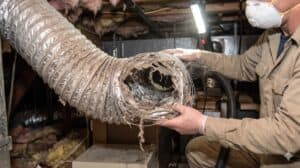
Flexible ducts often run through crowded attic spaces where installers must work around framing, electrical wiring, and plumbing. Sharp bends and unsupported sections can develop over time, creating low spots where dust collects. These areas are difficult to reach, and pushing cleaning equipment through them can worsen an existing kink or tear the lining.
Technicians performing duct cleaning in Brentwood, TN, may encounter older duct systems with compressed sections or connections that have shifted over time. Simply pulling a cleaning hose through these passages can place stress on the duct joints. A visual inspection helps identify problem areas before equipment enters the system, allowing technicians to decide whether cleaning or replacing a damaged section makes more sense.
Knowing When a Flexible Duct Should Be Replaced Instead
Cleaning cannot fix a torn liner, crushed duct, or insulation damaged by moisture. Once the inner surface begins separating from the supporting wire, mechanical cleaning may make the problem worse. Wet or contaminated insulation creates another concern because surface cleaning cannot reliably remove material trapped within the duct’s layers.
Homeowners looking for duct cleaning services should understand that replacement is sometimes the better option. A technician may recommend replacing sections with severe damage, persistent moisture problems, or contamination that cannot be safely removed. This is particularly important for older ductwork that has become brittle after years of exposure to attic heat.
Reliable duct cleaning services in Brentwood, TN, should include an assessment of the system before work begins. Contractors who inspect connections, check for collapsed sections, and explain material limitations help homeowners avoid paying to clean ductwork that needs repairs. The best duct cleaners recognize when continuing the job could create more problems than it solves.
What Proper Cleaning Should Leave Behind
Successful air duct cleaning in Brentwood, TN, involves more than removing visible dust from registers. Flexible ducts should retain their original shape, with no punctures, loose connections, or damaged insulation. Technicians should also check accessible sections for signs of displaced liners and verify that cleaning equipment has not weakened the duct structure.
Clean air ducts still need proper support and routine HVAC maintenance to stay in good condition. Dust buildup can return through leaky connections, poorly fitted filters, or debris entering through return openings. Homeowners comparing the best duct cleaners in Brentwood, TN, benefit from asking whether the company follows manufacturer recommendations for flexible duct materials.
For residential systems that need professional attention, Mr. B’s Air Duct Cleaning offers duct cleaning services throughout Brentwood TN. Its experience with residential HVAC ductwork makes it a practical company to contact when homeowners want to discuss cleaning options. An inspection can help determine whether flexible ducts can be cleaned safely or whether damaged sections require further attention.